Photo by Alexandre Debiève on Unsplash
 2701_02lfw_ef_f


Voices of the Industry
Sign up for our eNewsletters
Get the latest news and updates
Learning Resources
Lasers/Sources
© Endeavor Business Media
 photonicsnxt_ondemand
Optics
© Endeavor Business Media
 1792532058572
Credit: Yole Group
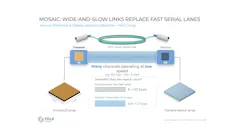 Wide and slow architecture.
Credit: Ill. Niklas Elmehed © Nobel Prize Outreach
 Henri B. Kagan (left) and Kenso Soai (right), winners of the 2026 Nobel Prize in Chemistry.
Quantum
© Endeavor Business Media
 1791911534627
Credit: Joshua Mornhinweg
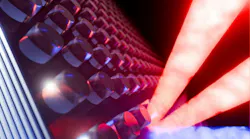 A rendering of the team’s device.
Credit: Jean-Michel Naud Photography/Nord Quantique
 Nord Quantique's four-qubit monolith, integrating superconducting quantum circuits designed for bosonic quantum error correction.
Credit: Swetapadma Sahoo
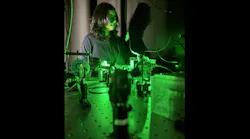 Swetapadma Sahoo in the lab.
Test/Measurement
Credit: Ill. Niklas Elmehed © Nobel Prize Outreach
 2026 Nobel Prize in Physics winner Francis Halzen.
© Endeavor Business Media
 lfw_ftperic_dieboldgraphicpromo
Detectors/Imaging
Credit: RCA Electro-Optics Handbook
 FIGURE 1. Legacy Eleven Parameter Image Intensifier Nomograph.4
Executive Forum
Credit: Leonardo Electronics US Inc.
 Leonardo’s T6 heatsink with 60 × 1-kW bars.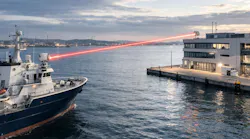

© Endeavor Business Media
 1787593327167